Free Demo


Vielartige Produkte, sicherlich ist ein Typ geeignet für Sie !
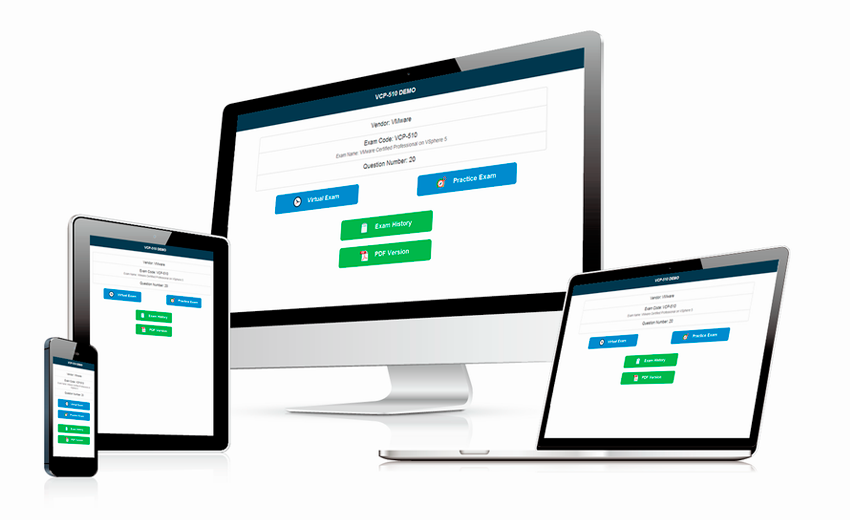
Wir haben für Context-Engineer-Associate (Databricks Certified Context Engineer Associate) Prüfung drei Versionen vorbereitet, nämlich Context-Engineer-Associate PDF Version, Context-Engineer-Associate PC Simulationssoftware und Context-Engineer-Associate Online Test Engine. Nach jahrelangen Sammlungen und Marktforschungen haben unsere IT-Experten über 6000 Examfragen im Datensystem gespeichert, welche die gefragtesten Examfragen völlig abdecken.
PDF Version: Falls Sie ein traditionell gesinnter Mensch sind, würde Ihenn diese Context-Engineer-Associate PDF Version bestimmt gefallen. Ihr Vorteil liegt darin, dass Sie die gekaufte Context-Engineer-Associate Examfragen drucken und dann ruhig lernen können.
PC Simulationssoftware: Wie dieser Name andeutet, mit diesem PC Simulationssoftware können Sie die Context-Engineer-Associate Prüfungsatmosphäre zu Hause im Voraus erleben, dadurch dass Sie der realen Context-Engineer-Associate Prüfung nicht so fremd sind. Darüber hinaus würden Sie auch bei der formellen Databricks Context-Engineer-Associate Prüfung nicht so nervös sein. Dieses Context-Engineer-Associate Simulationssoftware kann auf mehrere Computers heruntergeladen werden, aber es läuft nur über Winsdows-Betriebssystem.
APP (Online Test Engine): Auf irgendein elektrisches Gerät kann dieses Context-Engineer-Associate Online Test Engine heruntergeladen und benutzt werden. Sogar wenn Ihr Gerät offline ist, läuft dieses APP auch unbeeinflusst.
Je nach Ihrem eigenen Geschmack wählen Sie eine Version, aber es ist dringend empfohlen, dass Sie drei Versionen für Context-Engineer-Associate Prüfungsfragen zusammen kaufen. Einerseits sind sie nicht so viel teurer als irgend eine Version, andererseits ist es günstiger für Sie, sich mit drei Versionen auf die Context-Engineer-Associate Prüfung vorzubereiten. Ss ist sozusagen, solange Sie ein Bedürfnis nach Context-Engineer-Associate (Databricks Certified Context Engineer Associate) Prüfung haben, können wir Sie zufrieden stellen.
Verlässliche Sicherheit
In Bezug auf die Sicherheit haben wir genügende Aufmerksamkeit geschenkt. Die Privatsphäre unsere Kunden ist absolut geschützt geworden. Darum brauchen Sie keine Sorge zu machen.
Beim Bezahlen benutzen wir „Credit Card", die zuverlässigste und sicherste Zahlungsmittel ist.

Einfach und bequem zu kaufen: Um Ihren Kauf abzuschließen, gibt es zuvor nur ein paar Schritte. Nachdem Sie unser Produkt per E-mail empfangen, herunterladen Sie die Anhänge darin, danach beginnen Sie, fleißig und konzentriert zu lernen!
Zufriedenstellender Kundendienst
Vor dem Kauf können Sie zunächst kostenlose Demo auf unserer Webseite herunterladen und probeweise gebrauchen, wären Sie damit zufrieden, dann können Sie unsere Databricks Context-Engineer-Associate Examfragen ruhig kaufen. Unser Kundenservice ist online rund um die Uhr. Empfangen wir Ihre E-mail oder Nachricht, antworten wir Ihnen so früh wie möglich.
Täglich überprüft unsere IT-Experten das Datensystem, ob sich die Context-Engineer-Associate Examfragen verändern oder aktualisieren. Die aktualisierten Context-Engineer-Associate Examfragen werden per E-mail an Sie geschickt. Bitte überprüfen Sie Ihre E-mail regelmäßig. Nachdem Sie unser Context-Engineer-Associate Examfragen gekauft haben, gewähren wir Ihnen einjährige kostenlose Aktualisierung. Ein Jahr später, wenn Sie diesen Service ein Jahr später weiter genießen möchten, zugestehen wir Ihnen darauf 50% Rabatt.
Die Bestehensrate für Für Context-Engineer-Associate Prüfung erreicht 98.9%, denn alle von uns angebotenen Context-Engineer-Associate Examfragen sind von unseren Experten sorgfältig ausgesucht. Sie brauchen keine unnötige Zeit und Mühe auf jene nutzlose Databricks Context-Engineer-Associate Examfragen vergeuden, so ist Ihre Bestehensrate nazürlich höher als die anderen. Auch wenn Sie unglücklicherweise in der Context-Engineer-Associate Prüfung durchfallen, würden Sie auch keinen finanziellen Verlust erleiden. Denn wir können Ihnen versprechen, solange Sie und Ihr von dem Prüfungszentrum ausgestelles Zeugnis gezeigt haben, werden Wir Ihnen nach der Bestätigung alle Ihren Gebühren zurückzahlen. Das ist das sogenannte Slogan „Keine Hilfe, volle Erstattung". Oder Sie können andere Prüfungsfragen bei uns wechseln, was auch kostenlos ist. Trotzdem wüschen wir Ihnen herzlich, dass Sie Ihre Context-Engineer-Associate Prüfung zum ersten Mal bestehen können.
Haben Sie das Gefühl, dass Ihre Karriere in Sackgasse geraten ist? Als Angestellter in der IT-Branche sollen Sie sich darüber klar sein, was solches Databricks Context-Engineer-Associate Zertifikat für Sie bedeutet. Mit diesem Context-Engineer-Associate Zertifikat können Sie in einer größeren Firma arbeiten, verdoppeltes Gehalt erhalten und somit ein besseres „Ich“ werden. Es ist eben die Zeit, Maßnahme zu ergreifen, also Context-Engineer-Associate Zertifizierungsprüfung zu bestehen. Wählen Sie unser ExamFragen und bringen Sie Ihrem Leben tiefgreifende Veränderungen. Warum wählen Sie uns? Hier sind die Gründe:
Databricks Context-Engineer-Associate Prüfungsthemen:
| Abschnitt | Gewichtung | Ziele |
|---|---|---|
| System-Prompt- und Anweisungsdesign | 9% | - Techniken zur Prompt-Strukturierung und Best Practices - Entwurf effektiver System-Prompts und Anweisungen - Ausrichtung des Agentenverhaltens an beabsichtigten Zielen |
| Kontextkomprimierung und -verdichtung | 11% | - Einschränkungen und Limitierungen des Kontextfensters - Strategien zum Kürzen und Verdichten - Techniken zur selektiven Informationsspeicherung |
| Speicherarchitektur mit Lakebase und MLflow | 18% | - Speichertypen: Sitzungs-, Kurzzeit- und Langzeitpersistenz - Aufbau von persistentem Speicher mit Lakebase - Zustandsverwaltung über Agentensitzungen hinweg - Verfolgung und Evaluierung von Speicherkonfigurationen mit MLflow |
| Wissensabruf und Genie-Konfiguration | 20% | - Verwaltung der Abrufqualität und Vermeidung von Kontextverschmutzung - Konfiguration und Verwendung von Databricks Genie - Abrufstrategien: statisch vs. dynamisch - Konfiguration von Databricks AI Search für den Abruf relevanter Kontexte |
| Grundlagen des Context Engineering | 16% | - Kernkonzepte des Context Engineering für KI-Agenten - Kontext-Lebenszyklus und Datenfluss - Rolle des Kontexts bei der Zuverlässigkeit und Leistung von Agenten |
| Design für Multi-Agenten- und Langzeitaufgaben | 13% | - Evaluierung und Iteration von Context-Engineering-Entscheidungen - Verwaltung des Kontexts über erweiterte Workflows hinweg - Governance: Unity Catalog-Integration, Datenqualität und Zugriffskontrolle - Kontextkoordination in Multi-Agenten-Systemen |
| Tool-Design, MCP und Agentenkontext | 13% | - Implementierung des Model Context Protocol (MCP) - Integration von Agenten mit externen Tools und Datenquellen - Kontextverwaltung für Tool-Aufrufe |
Databricks Certified Context Engineer Associate Context-Engineer-Associate Prüfungsfragen mit Lösungen
A context engineer is building a multi-agent Databricks workflow where an orchestrating agent coordinates five sub-agents, each performing document analysis, entity extraction, and summarization tasks. The orchestrator receives the complete raw output from each sub-agent, including intermediate reasoning chains, extracted entity lists, and status messages, and appends all of it to its running context window before issuing follow-up instructions. After scaling to production document volumes, the orchestrator's context window consistently saturates before all sub-agent results are processed, causing truncation errors and a loss of task coherence.
Which two changes to sub-agent output design would reduce the orchestrator's context load while preserving the information it needs to continue coordinating tasks?
Choose two
- A. Merge all five sub-agents into a single agent so the orchestrator receives one combined output instead of five separate outputs per workflow run.
- B. Configure sub-agents to store full outputs in a Lakebase table and return only a record identifier to the orchestrator.
- C. Increase the orchestrator's model context window by switching to a larger foundation model so that all sub-agent outputs fit without truncation.
- D. Reduce the number of sub-agents so that fewer tokens are sent to the orchestrator before final synthesis.
- E. Restructure sub-agent outputs to return only a concise structured summary object containing task status, key extracted entities, and a confidence score, omitting intermediate reasoning chains.
Antwort: B,E 🗳️
Erklärung: (Nur für ExamFragen-Mitglieder sichtbar)
A context engineer is creating a Databricks agent to triage incoming customer support tickets for a B2B software platform. Each ticket averages 200 tokens.
For each ticket, the agent must:
(1) assign a severity rating of P0/P1/P2/P3 based on whether the issue is fully blocking, degrades core functionality, affects a non-critical feature, or is informational-a judgment that requires reading the ticket body rather than matching keywords; (2) route the ticket to one of eight engineering teams based on the technical area implied by the ticket; (3) generate a brief, context-aware acknowledgment reply.
The pipeline must process up to 500 tickets per minute with an end-to-end latency budget of under 2 seconds per ticket. The token budget per invocation is 2,048 tokens, and the operations team has flagged that inference costs must remain minimal at this throughput.
Which reasoning mode should the context engineer configure for the agent?
- A. Reduced thinking, because the task requires modest structured reasoning across four severity tiers, a small thinking budget fits within the 2,048-token invocation, and latency and cost stay manageable at
500 tickets per minute. - B. Extended thinking with a default thinking budget, because severity classification across four tiers and routing across eight teams benefits from deep chain-of-thought reasoning to maximize accuracy.
- C. Extended thinking with max_tokens capped at 1,024, because limiting the response length reduces cost while preserving full reasoning depth.
- D. Standard mode with extended thinking disabled, because skipping all reasoning overhead minimizes both per-invocation latency and inference cost at 500 tickets per minute.
Antwort: A 🗳️
Erklärung: (Nur für ExamFragen-Mitglieder sichtbar)
A context engineer runs a finance Q & A agent on Databricks. The agent invokes a Genie space backed by tables in the finance.silver schema, and Genie chooses which table to query for each user questions by reading Unity Catalog table and column metadata. Two tables exist in the schema: revenue and revenue_gross.
MLflow evaluation runs show the Correctness scorer flagging frequent failures in which Genie queries revenue_gross when the user asks about net revenue, and queries revenue when the user asks about gross figures. Both tables are in active production use and must remain available to the Genie space, and the same disambiguation should be usable by other Genie spaces and BI consumers building against the same schema.
Which intervention resolves this failure?
- A. Apply a Unity Catalog certified-status tag to revenue and a deprecated-status tag to revenue_gross so that downstream consumers treat revenue as the authoritative source.
- B. Apply a custom Unity Catalog tag categorizing one table as the primary revenue source and the other as a secondary view, so Genie's tool selection prefers the primary.
- C. Add a Genie space instruction at the space level stating which table to use for net-revenue questions and which to use for gross-revenue questions, so Genie applies the rule when routing each user question.
- D. Add COMMENT text on both tables and their columns in Unity Catalog that clearly distinguishes the two tables - what each represents, the units, and the basis, so Genie reads the disambiguating descriptions when routing each user question.
Antwort: D 🗳️
Erklärung: (Nur für ExamFragen-Mitglieder sichtbar)
A context engineer is preparing to deploy a per-tenant Databricks agent for a SaaS retail analytics platform.
Each platform customer is provisioned with their own Unity Catalog catalog, retail_ & lt;customer & gt;, and within each tenant catalog, data is organized by business domain rather than by origin.
The sales schema contains the customer's POS transaction and returns tables, which the customer's source systems write to throughout the day, alongside the daily_sales_by_store, hourly_revenue_by_category, and top_skus_weekly summary tables that a nightly Lakeflow Jobs pipeline produces by reading those POS tables. The inventory schema contains stock-level and inbound-shipment tables written continuously by ingestion, alongside demand_forecast_7d and reorder_suggestions tables produced by the SaaS's ML pipelines. The customer schema contains customer master records and contact tables, all populated by ingestion.
The SaaS deploys one agent per customer through Model Serving, and each agent has its own service principal. Before any agent endpoint is registered, the governance requirements are that an agent for a given customer must be able to retrieve data only from that customer's catalog and never from another customer's catalog, and that within its own customer's catalog, the agent must be able to retrieve only from tables populated directly by the customer's ingestion pipelines, never from nightly summaries, forecasts, or other tables produced by SaaS pipelines.
Which governance approach should the context engineer implement for each tenant's agent before registration?
- A. For each tenant's agent service principal, grant USE CATALOG only on that tenant's retail_ < customer > catalog and, within that catalog, grant USE SCHEMA on each domain schema together with table-level SELECT only on the tables populated by the customer's ingestion pipelines. Leave the nightly summary, forecast, and other SaaS-produced tables in those schemas ungranted.
- B. For each tenant's agent service principal, grant USE CATALOG only on that tenant's retail_ < customer > catalog and USE SCHEMA together with SELECT on the sales, inventory, and customer schemas, relying on the per-tenant catalog boundary to scope retrieval to the customer's data.
- C. Provision a single agent service principal shared across all tenants because per-tenant service principals are operationally heavy at the SaaS's expected scale. Grant the shared service principal USE CATALOG on every retail_ < customer > catalog and table-level SELECT only on the ingestion-fed tables in each catalog. Configure the agent's retrieval tool to inject the requesting customer's catalog name into every query so the agent reads only the right tenant's tables at request time.
- D. For each tenant's agent service principal, grant USE CATALOG on that tenant's retail_ < customer > catalog and USE SCHEMA together with SELECT on the sales, inventory, and customer schemas.
Apply a Unity Catalog tag source=ingest to every ingestion-fed table across the tenant catalogs and configure each agent's retrieval logic to issue queries only against tables carrying that tag.
Antwort: A 🗳️
Erklärung: (Nur für ExamFragen-Mitglieder sichtbar)
A context engineer is debugging a Databricks agent that supports a multi-turn customer support application.
The agent keeps a running summary of all conversation history across every user session in a single vector index and retrieves it on every turn through semantic search. Users report that the agent loses track of facts stated earlier in the same session, while unrelated details from other users' past sessions appear unexpectedly.
Latency has also increased as conversation volume grows.
Which storage configuration correctly resolves the memory type mismatch that is causing this degraded behavior?
- A. Use a session-scoped short-term buffer to retain all within-session conversation turns, and reserve the vector store for durable cross-session user facts retrieved by semantic search.
- B. Partition the vector index by user ID and session ID so that semantic retrieval is scoped per session, preventing cross-session bleed while reserving long-term facts for all users.
- C. Use a session-scoped short-term buffer to retain all within-turn context, and write a full conversation summary to the vector index at the end of each turn so semantic retrieval stays current across all active sessions.
- D. Replace the vector index with a relational table partitioned by session ID, and retrieve all rows matching the current session on every turn to maintain full conversational context for both short-term and long-term memory needs.
Antwort: A 🗳️
Erklärung: (Nur für ExamFragen-Mitglieder sichtbar)
Seite 1 von 11 wird angezeigt.
Fragen 1-5 von 52 werden angezeigt.


 0 Kundenrezensionen