

 Free Demo
 3 Kundenrezensionen

Vielartige Produkte, sicherlich ist ein Typ geeignet für Sie !
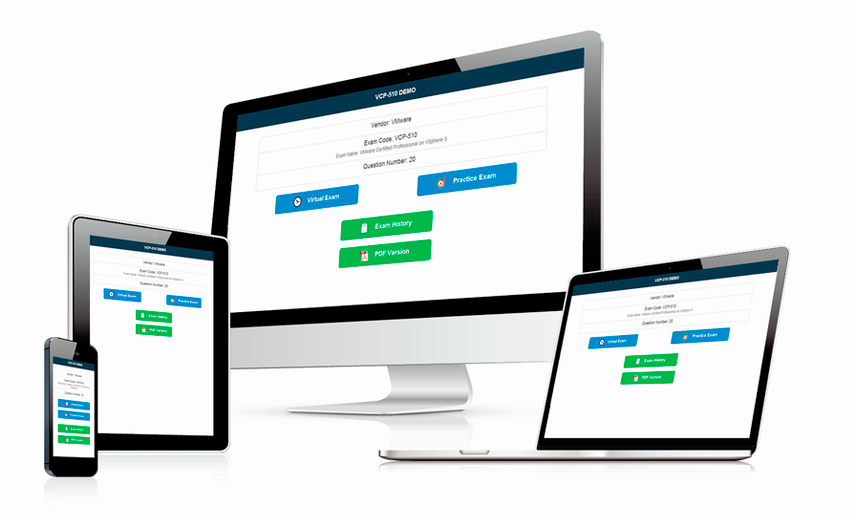
Wir haben für CCAR-F (Claude Certified Architect – Foundations) Prüfung drei Versionen vorbereitet, nämlich CCAR-F PDF Version, CCAR-F PC Simulationssoftware und CCAR-F Online Test Engine. Nach jahrelangen Sammlungen und Marktforschungen haben unsere IT-Experten über 6000 Examfragen im Datensystem gespeichert, welche die gefragtesten Examfragen völlig abdecken.
PDF Version: Falls Sie ein traditionell gesinnter Mensch sind, würde Ihenn diese CCAR-F PDF Version bestimmt gefallen. Ihr Vorteil liegt darin, dass Sie die gekaufte CCAR-F Examfragen drucken und dann ruhig lernen können.
PC Simulationssoftware: Wie dieser Name andeutet, mit diesem PC Simulationssoftware können Sie die CCAR-F Prüfungsatmosphäre zu Hause im Voraus erleben, dadurch dass Sie der realen CCAR-F Prüfung nicht so fremd sind. Darüber hinaus würden Sie auch bei der formellen Anthropic CCAR-F Prüfung nicht so nervös sein. Dieses CCAR-F Simulationssoftware kann auf mehrere Computers heruntergeladen werden, aber es läuft nur über Winsdows-Betriebssystem.
APP (Online Test Engine): Auf irgendein elektrisches Gerät kann dieses CCAR-F Online Test Engine heruntergeladen und benutzt werden. Sogar wenn Ihr Gerät offline ist, läuft dieses APP auch unbeeinflusst.
Je nach Ihrem eigenen Geschmack wählen Sie eine Version, aber es ist dringend empfohlen, dass Sie drei Versionen für CCAR-F Prüfungsfragen zusammen kaufen. Einerseits sind sie nicht so viel teurer als irgend eine Version, andererseits ist es günstiger für Sie, sich mit drei Versionen auf die CCAR-F Prüfung vorzubereiten. Ss ist sozusagen, solange Sie ein Bedürfnis nach CCAR-F (Claude Certified Architect – Foundations) Prüfung haben, können wir Sie zufrieden stellen.
Verlässliche Sicherheit
In Bezug auf die Sicherheit haben wir genügende Aufmerksamkeit geschenkt. Die Privatsphäre unsere Kunden ist absolut geschützt geworden. Darum brauchen Sie keine Sorge zu machen.
Beim Bezahlen benutzen wir „Credit Card", die zuverlässigste und sicherste Zahlungsmittel ist.

Einfach und bequem zu kaufen: Um Ihren Kauf abzuschließen, gibt es zuvor nur ein paar Schritte. Nachdem Sie unser Produkt per E-mail empfangen, herunterladen Sie die Anhänge darin, danach beginnen Sie, fleißig und konzentriert zu lernen!
Zufriedenstellender Kundendienst
Vor dem Kauf können Sie zunächst kostenlose Demo auf unserer Webseite herunterladen und probeweise gebrauchen, wären Sie damit zufrieden, dann können Sie unsere Anthropic CCAR-F Examfragen ruhig kaufen. Unser Kundenservice ist online rund um die Uhr. Empfangen wir Ihre E-mail oder Nachricht, antworten wir Ihnen so früh wie möglich.
Täglich überprüft unsere IT-Experten das Datensystem, ob sich die CCAR-F Examfragen verändern oder aktualisieren. Die aktualisierten CCAR-F Examfragen werden per E-mail an Sie geschickt. Bitte überprüfen Sie Ihre E-mail regelmäßig. Nachdem Sie unser CCAR-F Examfragen gekauft haben, gewähren wir Ihnen einjährige kostenlose Aktualisierung. Ein Jahr später, wenn Sie diesen Service ein Jahr später weiter genießen möchten, zugestehen wir Ihnen darauf 50% Rabatt.
Die Bestehensrate für Für CCAR-F Prüfung erreicht 98.9%, denn alle von uns angebotenen CCAR-F Examfragen sind von unseren Experten sorgfältig ausgesucht. Sie brauchen keine unnötige Zeit und Mühe auf jene nutzlose Anthropic CCAR-F Examfragen vergeuden, so ist Ihre Bestehensrate nazürlich höher als die anderen. Auch wenn Sie unglücklicherweise in der CCAR-F Prüfung durchfallen, würden Sie auch keinen finanziellen Verlust erleiden. Denn wir können Ihnen versprechen, solange Sie und Ihr von dem Prüfungszentrum ausgestelles Zeugnis gezeigt haben, werden Wir Ihnen nach der Bestätigung alle Ihren Gebühren zurückzahlen. Das ist das sogenannte Slogan „Keine Hilfe, volle Erstattung". Oder Sie können andere Prüfungsfragen bei uns wechseln, was auch kostenlos ist. Trotzdem wüschen wir Ihnen herzlich, dass Sie Ihre CCAR-F Prüfung zum ersten Mal bestehen können.
Haben Sie das Gefühl, dass Ihre Karriere in Sackgasse geraten ist? Als Angestellter in der IT-Branche sollen Sie sich darüber klar sein, was solches Anthropic CCAR-F Zertifikat für Sie bedeutet. Mit diesem CCAR-F Zertifikat können Sie in einer größeren Firma arbeiten, verdoppeltes Gehalt erhalten und somit ein besseres „Ich“ werden. Es ist eben die Zeit, Maßnahme zu ergreifen, also CCAR-F Zertifizierungsprüfung zu bestehen. Wählen Sie unser ExamFragen und bringen Sie Ihrem Leben tiefgreifende Veränderungen. Warum wählen Sie uns? Hier sind die Gründe:
Anthropic CCAR-F Prüfungsthemen:
| Abschnitt | Gewichtung | Ziele |
|---|---|---|
| Context Management & Reliability | 15% | - Überlegungen zur Bereitstellung in der Produktionsumgebung - Verwaltung von Kontextfenstern und Informationsfluss - Evaluierungs- und Zuverlässigkeitsstrategien |
| Agentic Architecture & Orchestration | 27% | - Auswahl geeigneter Claude-Architekturen - Entwurf von agentischen Systemen und Workflows - Agenten-Koordinations- und Orchestrierungsmuster |
| Claude Code Configuration & Workflows | 20% | - Integration von Claude Code in Entwicklungsprozesse - Claude Code Nutzung und Konfiguration - Workflows zur Entwicklerproduktivität |
| Prompt Engineering & Structured Output | 20% | - Generierung und Validierung strukturierter Ausgaben - Verbesserung der Antwortqualität und -konsistenz von Claude - Strategien für das Prompt-Design |
| Tool Design & MCP Integration | 18% | - Werkzeugsicherheit, Zuverlässigkeit und Benutzerfreundlichkeit - Entwurf effektiver Tools für Claude-Anwendungen - Model Context Protocol (MCP) Konzepte und Integration |
Anthropic Claude Certified Architect – Foundations CCAR-F Prüfungsfragen mit Lösungen
1. You are building a customer support resolution agent using the Claude Agent SDK. The agent handles high- ambiguity requests like returns, billing disputes, and account issues. It has access to your backend systems through custom Model Context Protocol (MCP) tools ( get_customer , lookup_order , process_refund , escalate_to_human ). Your target is 80%+ first-contact resolution while knowing when to escalate.
Your process_refund tool returns two types of errors: technical errors ("503 Service Unavailable",
"Connection timeout") that are transient (~5% of calls), and business errors ("Order exceeds 30-day return window", "Item already refunded") that are permanent (~12% of calls). Monitoring shows the agent wastes 3-
4 turns retrying business errors that can never succeed. Currently, both error types return only a plain text message to Claude.
What's the most effective way to reduce wasted retries while improving customer-facing response quality?
A) Add few-shot examples showing how to distinguish retriable from non-retriable errors by parsing error message text.
B) Implement automatic retry logic at the tool layer for technical errors only, passing business errors to Claude without retries.
C) Add a check_refund_eligibility tool that must be called before process_refund to prevent business rule violations.
D) Return structured error responses with "retriable": false for business errors and a customer-friendly explanation for Claude to use.
2. You are building a structured data extraction system using Claude. The system extracts information from unstructured documents, validates the output using JavaScript Object Notation (JSON) schemas, and maintains high accuracy. It must handle edge cases gracefully and integrate with downstream systems.
The system routes documents with extraction confidence below 85% to human review. A quarterly audit reveals that 12% of high-confidence extractions (#85%) also contain errors-cases where the model finds plausible-but-incorrect values. Error sources vary: comparison tables showing competitor specs, appendices referencing different product variants, and ambiguous phrasing the model misinterprets. You need a sustainable strategy to catch these high-confidence errors and measure whether improvements reduce the error rate over time.
What approach is most effective?
A) Implement stratified random sampling reviewing a fixed percentage of high-confidence extractions weekly, enabling error rate measurement and novel pattern detection.
B) Add a verification pass that re-extracts from each high-confidence document, flagging cases where the two extraction attempts produce different results.
C) Lower the confidence threshold from 85% to 70%, routing a larger volume of extractions to human review.
D) Implement heuristic rules that flag documents containing comparison tables or appendices for review regardless of confidence score.
3. You are building a customer support resolution agent using the Claude Agent SDK. The agent handles high- ambiguity requests like returns, billing disputes, and account issues. It has access to your backend systems through custom Model Context Protocol (MCP) tools (get_customer, lookup_order, process_refund, escalate_to_human). Your target is 80%+ first-contact resolution while knowing when to escalate.
Production logs show that when the agent handles complex billing disputes requiring 6+ tool calls, it sometimes exhausts its max_turns limit after gathering data but before completing resolution or escalating.
The team's goal is to guarantee that every customer interaction ends with either a completed resolution or a human handoff, regardless of how the agent loop terminates.
Which approach achieves this guarantee?
A) Implement a pre-tool-use hook that counts tool invocations and terminates the loop with an automatic escalation once the agent reaches 80% of its max_turns limit.
B) Split the workflow into two sequential agent invocations-a first agent gathers information via get_customer and lookup_order, then a second agent receives that data and handles process_refund or escalate_to_human, each with separate turn budgets.
C) Add system prompt instructions telling the agent to call escalate_to_human with a summary of its findings whenever it determines it cannot complete resolution within its remaining actions.
D) Add orchestration-layer code that checks the agent's outcome after each loop termination-if the loop ended without a completed resolution or escalation, programmatically call escalate_to_human with the accumulated conversation context and tool results.
4. You are building a customer support resolution agent using the Claude Agent SDK. The agent handles high- ambiguity requests like returns, billing disputes, and account issues. It has access to your backend systems through custom Model Context Protocol (MCP) tools ( get_customer , lookup_order , process_refund , escalate_to_human ). Your target is 80%+ first-contact resolution while knowing when to escalate.
Your agent is handling a billing dispute. After calling get_customer and lookup_order , it identifies that the dispute involves a promotional pricing error requiring manager approval-beyond the agent's authorization level.
How should the workflow handle this mid-process escalation?
A) Attempt the refund with process_refund anyway, escalating only if the system rejects the transaction.
B) Persist the complete conversation and tool response history to a database, then call escalate_to_human with a reference ID.
C) Call escalate_to_human , passing only the customer's original message.
D) Compile a structured handoff with customer details, order info, and the identified issue before calling escalate_to_human .
5. You are using Claude Code to accelerate software development. Your team uses it for code generation, refactoring, debugging, and documentation. You need to integrate it into your development workflow with custom slash commands, CLAUDE.md configurations, and understand when to use plan mode vs direct execution.
You're implementing a new payment processing module that must follow your project's established patterns for database transactions, error handling, and audit logging. You've identified three existing modules that exemplify these patterns: db_utils.py , error_handlers.py , and audit_logger.py . This is a one-off integration task-these patterns are well-documented in your team wiki and don't need additional project-level documentation.
What's the most effective approach?
A) Describe the patterns from the three modules in natural language in your prompt, explaining the transaction handling approach, error format, and logging conventions Claude should follow.
B) Add documentation of each pattern to your CLAUDE.md file, establishing them as project conventions that Claude will apply automatically.
C) Ask Claude to explore your codebase to find and understand the transaction, error handling, and logging patterns before generating the new module.
D) Use @ references to include the three modules directly in your prompt, giving Claude concrete code examples of the patterns to follow.
Fragen und Antworten:
| 1. Frage Antwort: D | 2. Frage Antwort: A | 3. Frage Antwort: D | 4. Frage Antwort: D | 5. Frage Antwort: D |









Quatiki -
Ich danke ExamFragen dafür, dass sie mir die besten Prüfungamaterialien angeboten hat.